What's new
The Front Row Forums

Register a free account today to become a member of the world's largest Rugby League discussion forum! Once signed in, you'll be able to participate on this site by adding your own topics and posts, as well as connect with other members through your own private inbox!

A Saint and his Mate Go Home

Father Ted

First Grade
Messages
5,531
Almost 70 years after they were tortured and executed by Japanese troops on a tiny island off the coast of Papua New Guinea, the remains of two Australian soldiers from the top-secret ‘Z’ Special Unit have been found and identified and will be buried with full military honours, reports Ian McPhedran, National Defence Writer for News Limited (Sunday Telegraph, 2 March 2014).

Former St George fir...st grade rugby league player Lance Corporal Spencer Henry Walklate, 27, and Private Ronald Eagleton, 20, were members of an ill-fated mission to the enemy occupied island of Mushu off the coast of Wewak in April 1945.

Just one man, Mick Dennis, survived and made it back to the mainland. Walklate and Eagleton were captured and executed and their remains were smashed, cremated and buried by the Japanese in a bid to hide the evidence of war crimes.

Former SAS Major Jack Thurgar, who is a contractor with the Army’s Unrecovered War Casualties office, spent years researching the final days of the men and tracking down the site of their graves on a neighbouring island called Kairiru.

He made several trips into the jungle and uncovered archival evidence of their fate in archives in Tokyo. The remains were recovered in May 2013.

After extensive testing fo the remains the families of the men have been formally notified by Army Headquarters that “on the balance of probabilities’’ they were indeed the two missing soldiers.
 
Last edited:

TruSaint

Referee
Messages
21,129
70 years on. Amazing.
Well done SAS Major Jack Thurgar... perseverance and I think closure for some families.
Thanks for sharing that FT.
 

Willow

Assistant Moderator
Messages
112,768
This can be updated now...

[FONT=Arial, Helvetica, sans-serif][SIZE=-1]Walklate, Spencer[/SIZE][/FONT]. [FONT=Arial, Helvetica, sans-serif][SIZE=-1]St George, 1943, 15 games.
2t, 3g (12pts)[/SIZE][/FONT] [FONT=Arial, Helvetica, sans-serif][SIZE=-1]Promising career tragically cut short in 1943 when listed as missing in action during WWII.[/SIZE][/FONT]

http://www.jubileeavenue.com.au/history/history_players_de.php
 
Last edited:

Willow

Assistant Moderator
Messages
112,768
2 tries and 3 goals in 15 games, hard to say but long odds on him being a front rower.

Lock forward maybe, in the halves or a centre. You'll have to do some research Father.
 

Father Ted

First Grade
Messages
5,531

TV Guide


Leagues club hails world war’s Saints world

By Brad Forrest

Aug. 6, 2012, 12:08 a.m.
RUGBY league memories and wartime heroics will form the background of a history-making day at an upcoming St George Leagues Club ceremony.
RUGBY league memories and wartime heroics will
form the background of a history-making day at an upcoming St George Leagues Club ceremony.


Brad Forrest reports.
NSW Sports Minister Graham Annesley will be joined by 94-year-old Mick Dennis on Wednesday, August 15, when St George Leagues Club rededicates an Honor Board in memory of eight St George Dragons servicemen lost during World War II.

Mr Dennis was awarded the Military Medal for his part in a commando operation in April 1945.
As historian John Thurgar detailed, in the pre-season training camp in 1943 the mood was sombre among the St George first grade players. There was not the usual banter and laughter for a tightly knit group at the top of their game.

Australia was threatened and under attack. Already four men who played first grade for St George had been killed — two serving in the European theatre with the RAAF and two in captivity at the hands of the Japanese in the notorious Chang prisoner of war camp in Singapore.

Another four would go on to lose their lives: two more serving in the RAAF and another two in the Army — eight in total.

‘‘Word came to the team in the previous pre-season training camp that Darwin had been bombed in the largest air raid ever on Australian soil,’’ said Thurgar. ‘‘And the day after the players’ Saturday match on May 30, 1942, three Japanese mini submarines attacked Sydney itself.

‘‘Many people were anxious, frightened, and confused. Others, however, saw their duty clearly. That was to defend Australia and our way of life.’’
Mick Dennis was the sole survivor of Operation Copper in New Guinea in April 1945 . Seven mates perished, including former policeman and Dragons player Spencer Walklate.

To escape Sapper Dennis was forced to swim through shark-infested waters and fight off the Japanese. He succeeded, finally getting valuable information
about hidden enemy guns to the advancing Allied forces. At the end of the war, St George Leagues Club constructed and dedicated an Honor Board to commemorate the fallen. During reconstruction, possibly in the 1960s, it was lost.

‘‘But their memory was never ‘lost’ by their families, comrades, fellow players and friends,’’ said
Thurgar. Members of the public are welcome to attend, and news on relatives can be emailed to to John Thurgar [email protected].

THE EIGHT LOST DRAGONS
Leonard Reginald Brennan:
413161 RAAF
Born on February 26, 1911 in Birmingham England, he moved to Australia and lived at Ramsgate. A French polisher by trade, Brennan enlisted on August 16 1941 and trained as a pilot. He was second pilot on a Wellington bomber on the night of 7-8 June 1943 when his crew was sent to attack the island of Pantelleria in the Mediterranean Sea between Sicily and Tunis.

Their aircraft was shot down by a flak ship. All members of the crew were able to escape in a dinghy, but by the time a destroyer found them the following afternoon, Flight Sergeant Brennan and all but one of the crew had died in the cold. Brennan’s name is remembered on the Malta Memorial to the missing. He played nine games for St George in the 1932 season, 16 games in 1933 and 15 in 1934.


John Henry Holliday:
403513 RAAF
Born on February 10 1918 in St Peters, he enlisted in the RAAF on February 1, 1941. Holliday was posted to Darwin and left for Koepang Timor on January 30, 1942 aboard the Qantas flying boat Corio. When the aircraft was approaching a landing on the sea, it was attacked by seven Japanese fighters and had to make a forced landing three miles off shore.

The back of the aircraft broke and the crew and passengers were forced to swim ashore. Some were able to make it to shore but Aircraftman Class 1 Holliday was not among them. His name is remembered on the Northern Territory Memorial.


George Henry Holder:
NX51726 AIF
Born on March 27 1912 in Birmingham England Holder lived at Kogarah and enlisted in the Army on June 18, 1940. He was sent to Malaya as part of the 8th Division and became a POW when Malaya and Singapore were overrun by the Japanese in February 1942.

In September 1944 he and others were put on board the Japanese ship Rakuyo Maru to be sent to Japan to work in the coal mines. Midway between Vietnam and the Philippines, the US submarine Pampanito put two torpedos into the starboard side.

The ship sank quickly taking most of the POWs with it. Acting Sergeant Holder didn’t survive. His name is remembered on the Labuan Memorial.


John Patrick Lennox:
NX10786 AIF
Born on March 21, 1907 in Mudgee he enlisted in the Army on May 19 1941, went to Malaya as part of the 8th Division and became a prisoner when Singapore fell. He was part of the force that was sent to Thailand to build the infamous Thailand-Burma railway in primitive conditions with little food or medicine and brutal guards. Gunner Lennox’s health deteriorated and he died of illness on December7, 1943. Lennox is buried in the Thanbyuzayat War Cemetery in Myanmar. He played 13 games for the Dragons in 1930, 13 games in 1931 and 14 in 1932.


Arthur Victor Moymow:
N273737 AIF
Born on April 22, 1889 in Sydney, he enlisted in the Army on May 30, 1941 and remained in Australia and worked on the recruitment staff. This was most likely due to his age. Corporal Moymow took ill in October 1944 and died on October 18. He is buried in the Newcastle (Sandgate) War Cemetery.


Arthur Ronald Ross:
433226 RAAF
Born on January 25, 1925 at Teralba, NSW he enlisted in the RAAF in February 1943 where he trained as a pilot. It was during that time when Ross was flying a Kittyhawk and practising ground attacks that he collided with a Spitfire. The Spitfire was able to return and land safely but Sergeant Ross’s Kittyhawk spun in and he was killed. He is buried in the Mildura Public Cemetery.

James McKenzie Simpson:402026 RAAF
Born on November 3, 1920 in Newcastle, he was living in Fiji at the time war broke out and paid his own fare back to Australia so he could enlist in the RAAF on April 28, 1940 and trained as aircrew before being posted overseas to Malta. From Malta Simpson’s crew left for a photographic reconnaissance of the Tripoli coast on July 15, 1941. Despite an extensive search, they were not seen again. Simpson is remembered on the Malta Memorial. He played three games during the 1936 season.


Spencer Henry Walklate:
NX202843 AIF
Born on January 11, 1918 at Bushgrove, NSW he was a police Constable First Class at Redfern when war broke out, yet Walklate enlisted in the 2nd AIF on Dec 31, 1943. Spencer was appointed as a lance corporal and joined Z Special Unit in August 1944. He went to New Guinea and soon after was reported missing, presumed dead, on April 13, 1945 whilst deployed on Operation Copper (named after his profession) on Muschu Island, off the coast of PNG. It was later learnt that he had been captured, tortured and beheaded by the enemy on the nearby Kairiru Island. Spencer played 13 first grade games for St George in 1942


http://www.theleader.com.au/story/268034/leagues-club-hails-world-wars-saints-world/

 
Last edited:

Father Ted

First Grade
Messages
5,531

tv guide


leagues club hails world war?s saints world

by brad forrest

aug. 6, 2012, 12:08 a.m.
Rugby league memories and wartime heroics will form the background of a history-making day at an upcoming st george leagues club ceremony.
Rugby league memories and wartime heroics will
form the background of a history-making day at an upcoming st george leagues club ceremony.


brad forrest reports.
Nsw sports minister graham annesley will be joined by 94-year-old mick dennis on wednesday, august 15, when st george leagues club rededicates an honor board in memory of eight st george dragons servicemen lost during world war ii.

Mr dennis was awarded the military medal for his part in a commando operation in april 1945.
As historian john thurgar detailed, in the pre-season training camp in 1943 the mood was sombre among the st george first grade players. There was not the usual banter and laughter for a tightly knit group at the top of their game.

Australia was threatened and under attack. Already four men who played first grade for st george had been killed ? two serving in the european theatre with the raaf and two in captivity at the hands of the japanese in the notorious chang prisoner of war camp in singapore.

Another four would go on to lose their lives: Two more serving in the raaf and another two in the army ? eight in total.

??word came to the team in the previous pre-season training camp that darwin had been bombed in the largest air raid ever on australian soil,?? said thurgar. ??and the day after the players? saturday match on may 30, 1942, three japanese mini submarines attacked sydney itself.

??many people were anxious, frightened, and confused. Others, however, saw their duty clearly. That was to defend australia and our way of life.??
mick dennis was the sole survivor of operation copper in new guinea in april 1945 . Seven mates perished, including former policeman and dragons player spencer walklate.

To escape sapper dennis was forced to swim through shark-infested waters and fight off the japanese. He succeeded, finally getting valuable information
about hidden enemy guns to the advancing allied forces. At the end of the war, st george leagues club constructed and dedicated an honor board to commemorate the fallen. During reconstruction, possibly in the 1960s, it was lost.

??but their memory was never ?lost? by their families, comrades, fellow players and friends,?? said
thurgar. Members of the public are welcome to attend, and news on relatives can be emailed to to john thurgar [email protected].

the eight lost dragons
leonard reginald brennan:
413161 raaf
born on february 26, 1911 in birmingham england, he moved to australia and lived at ramsgate. A french polisher by trade, brennan enlisted on august 16 1941 and trained as a pilot. He was second pilot on a wellington bomber on the night of 7-8 june 1943 when his crew was sent to attack the island of pantelleria in the mediterranean sea between sicily and tunis.

Their aircraft was shot down by a flak ship. All members of the crew were able to escape in a dinghy, but by the time a destroyer found them the following afternoon, flight sergeant brennan and all but one of the crew had died in the cold. Brennan?s name is remembered on the malta memorial to the missing. He played nine games for st george in the 1932 season, 16 games in 1933 and 15 in 1934.


John henry holliday:
403513 raaf
born on february 10 1918 in st peters, he enlisted in the raaf on february 1, 1941. Holliday was posted to darwin and left for koepang timor on january 30, 1942 aboard the qantas flying boat corio. When the aircraft was approaching a landing on the sea, it was attacked by seven japanese fighters and had to make a forced landing three miles off shore.

The back of the aircraft broke and the crew and passengers were forced to swim ashore. Some were able to make it to shore but aircraftman class 1 holliday was not among them. His name is remembered on the northern territory memorial.


George henry holder:
Nx51726 aif
born on march 27 1912 in birmingham england holder lived at kogarah and enlisted in the army on june 18, 1940. He was sent to malaya as part of the 8th division and became a pow when malaya and singapore were overrun by the japanese in february 1942.

In september 1944 he and others were put on board the japanese ship rakuyo maru to be sent to japan to work in the coal mines. Midway between vietnam and the philippines, the us submarine pampanito put two torpedos into the starboard side.

The ship sank quickly taking most of the pows with it. Acting sergeant holder didn?t survive. His name is remembered on the labuan memorial.


John patrick lennox:
Nx10786 aif
born on march 21, 1907 in mudgee he enlisted in the army on may 19 1941, went to malaya as part of the 8th division and became a prisoner when singapore fell. He was part of the force that was sent to thailand to build the infamous thailand-burma railway in primitive conditions with little food or medicine and brutal guards. Gunner lennox?s health deteriorated and he died of illness on december7, 1943. Lennox is buried in the thanbyuzayat war cemetery in myanmar. He played 13 games for the dragons in 1930, 13 games in 1931 and 14 in 1932.


Arthur victor moymow:
N273737 aif
born on april 22, 1889 in sydney, he enlisted in the army on may 30, 1941 and remained in australia and worked on the recruitment staff. This was most likely due to his age. Corporal moymow took ill in october 1944 and died on october 18. He is buried in the newcastle (sandgate) war cemetery.


Arthur ronald ross:
433226 raaf
born on january 25, 1925 at teralba, nsw he enlisted in the raaf in february 1943 where he trained as a pilot. It was during that time when ross was flying a kittyhawk and practising ground attacks that he collided with a spitfire. The spitfire was able to return and land safely but sergeant ross?s kittyhawk spun in and he was killed. He is buried in the mildura public cemetery.

James mckenzie simpson:402026 raaf
born on november 3, 1920 in newcastle, he was living in fiji at the time war broke out and paid his own fare back to australia so he could enlist in the raaf on april 28, 1940 and trained as aircrew before being posted overseas to malta. From malta simpson?s crew left for a photographic reconnaissance of the tripoli coast on july 15, 1941. Despite an extensive search, they were not seen again. Simpson is remembered on the malta memorial. He played three games during the 1936 season.


Spencer henry walklate:
Nx202843 aif
born on january 11, 1918 at bushgrove, nsw he was a police constable first class at redfern when war broke out, yet walklate enlisted in the 2nd aif on dec 31, 1943. Spencer was appointed as a lance corporal and joined z special unit in august 1944. He went to new guinea and soon after was reported missing, presumed dead, on april 13, 1945 whilst deployed on operation copper (named after his profession) on muschu island, off the coast of png. It was later learnt that he had been captured, tortured and beheaded by the enemy on the nearby kairiru island. Spencer played 13 first grade games for st george in 1942


[url="http://www.theleader.com.au/story/268034/leagues-club-hails-world-wars-saints-world/"]http://www.theleader.com.au/story/268034/leagues-club-hails-world-wars-saints-world/[/url]


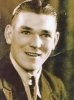
Lance corporal Spencer Walklate.jpg
 

TruSaint

Referee
Messages
21,129

TV Guide


Leagues club hails world war?s Saints world

By Brad Forrest

Aug. 6, 2012, 12:08 a.m.
RUGBY league memories and wartime heroics will form the background of a history-making day at an upcoming St George Leagues Club ceremony.
RUGBY league memories and wartime heroics will
form the background of a history-making day at an upcoming St George Leagues Club ceremony.


Brad Forrest reports.
NSW Sports Minister Graham Annesley will be joined by 94-year-old Mick Dennis on Wednesday, August 15, when St George Leagues Club rededicates an Honor Board in memory of eight St George Dragons servicemen lost during World War II.

Mr Dennis was awarded the Military Medal for his part in a commando operation in April 1945.
As historian John Thurgar detailed, in the pre-season training camp in 1943 the mood was sombre among the St George first grade players. There was not the usual banter and laughter for a tightly knit group at the top of their game.

Australia was threatened and under attack. Already four men who played first grade for St George had been killed ? two serving in the European theatre with the RAAF and two in captivity at the hands of the Japanese in the notorious Chang prisoner of war camp in Singapore.

Another four would go on to lose their lives: two more serving in the RAAF and another two in the Army ? eight in total.

??Word came to the team in the previous pre-season training camp that Darwin had been bombed in the largest air raid ever on Australian soil,?? said Thurgar. ??And the day after the players? Saturday match on May 30, 1942, three Japanese mini submarines attacked Sydney itself.

??Many people were anxious, frightened, and confused. Others, however, saw their duty clearly. That was to defend Australia and our way of life.??
Mick Dennis was the sole survivor of Operation Copper in New Guinea in April 1945 . Seven mates perished, including former policeman and Dragons player Spencer Walklate.

To escape Sapper Dennis was forced to swim through shark-infested waters and fight off the Japanese. He succeeded, finally getting valuable information
about hidden enemy guns to the advancing Allied forces. At the end of the war, St George Leagues Club constructed and dedicated an Honor Board to commemorate the fallen. During reconstruction, possibly in the 1960s, it was lost.

??But their memory was never ?lost? by their families, comrades, fellow players and friends,?? said
Thurgar. Members of the public are welcome to attend, and news on relatives can be emailed to to John Thurgar [email protected].

THE EIGHT LOST DRAGONS
Leonard Reginald Brennan:
413161 RAAF
Born on February 26, 1911 in Birmingham England, he moved to Australia and lived at Ramsgate. A French polisher by trade, Brennan enlisted on August 16 1941 and trained as a pilot. He was second pilot on a Wellington bomber on the night of 7-8 June 1943 when his crew was sent to attack the island of Pantelleria in the Mediterranean Sea between Sicily and Tunis.

Their aircraft was shot down by a flak ship. All members of the crew were able to escape in a dinghy, but by the time a destroyer found them the following afternoon, Flight Sergeant Brennan and all but one of the crew had died in the cold. Brennan?s name is remembered on the Malta Memorial to the missing. He played nine games for St George in the 1932 season, 16 games in 1933 and 15 in 1934.


John Henry Holliday:
403513 RAAF
Born on February 10 1918 in St Peters, he enlisted in the RAAF on February 1, 1941. Holliday was posted to Darwin and left for Koepang Timor on January 30, 1942 aboard the Qantas flying boat Corio. When the aircraft was approaching a landing on the sea, it was attacked by seven Japanese fighters and had to make a forced landing three miles off shore.

The back of the aircraft broke and the crew and passengers were forced to swim ashore. Some were able to make it to shore but Aircraftman Class 1 Holliday was not among them. His name is remembered on the Northern Territory Memorial.


George Henry Holder:
NX51726 AIF
Born on March 27 1912 in Birmingham England Holder lived at Kogarah and enlisted in the Army on June 18, 1940. He was sent to Malaya as part of the 8th Division and became a POW when Malaya and Singapore were overrun by the Japanese in February 1942.

In September 1944 he and others were put on board the Japanese ship Rakuyo Maru to be sent to Japan to work in the coal mines. Midway between Vietnam and the Philippines, the US submarine Pampanito put two torpedos into the starboard side.

The ship sank quickly taking most of the POWs with it. Acting Sergeant Holder didn?t survive. His name is remembered on the Labuan Memorial.


John Patrick Lennox:
NX10786 AIF
Born on March 21, 1907 in Mudgee he enlisted in the Army on May 19 1941, went to Malaya as part of the 8th Division and became a prisoner when Singapore fell. He was part of the force that was sent to Thailand to build the infamous Thailand-Burma railway in primitive conditions with little food or medicine and brutal guards. Gunner Lennox?s health deteriorated and he died of illness on December7, 1943. Lennox is buried in the Thanbyuzayat War Cemetery in Myanmar. He played 13 games for the Dragons in 1930, 13 games in 1931 and 14 in 1932.


Arthur Victor Moymow:
N273737 AIF
Born on April 22, 1889 in Sydney, he enlisted in the Army on May 30, 1941 and remained in Australia and worked on the recruitment staff. This was most likely due to his age. Corporal Moymow took ill in October 1944 and died on October 18. He is buried in the Newcastle (Sandgate) War Cemetery.


Arthur Ronald Ross:
433226 RAAF
Born on January 25, 1925 at Teralba, NSW he enlisted in the RAAF in February 1943 where he trained as a pilot. It was during that time when Ross was flying a Kittyhawk and practising ground attacks that he collided with a Spitfire. The Spitfire was able to return and land safely but Sergeant Ross?s Kittyhawk spun in and he was killed. He is buried in the Mildura Public Cemetery.

James McKenzie Simpson:402026 RAAF
Born on November 3, 1920 in Newcastle, he was living in Fiji at the time war broke out and paid his own fare back to Australia so he could enlist in the RAAF on April 28, 1940 and trained as aircrew before being posted overseas to Malta. From Malta Simpson?s crew left for a photographic reconnaissance of the Tripoli coast on July 15, 1941. Despite an extensive search, they were not seen again. Simpson is remembered on the Malta Memorial. He played three games during the 1936 season.


Spencer Henry Walklate:
NX202843 AIF
Born on January 11, 1918 at Bushgrove, NSW he was a police Constable First Class at Redfern when war broke out, yet Walklate enlisted in the 2nd AIF on Dec 31, 1943. Spencer was appointed as a lance corporal and joined Z Special Unit in August 1944. He went to New Guinea and soon after was reported missing, presumed dead, on April 13, 1945 whilst deployed on Operation Copper (named after his profession) on Muschu Island, off the coast of PNG. It was later learnt that he had been captured, tortured and beheaded by the enemy on the nearby Kairiru Island. Spencer played 13 first grade games for St George in 1942


http://www.theleader.com.au/story/268034/leagues-club-hails-world-wars-saints-world/

Speechless. just speechless.
This issue cuts to the bone. Deeply for me.
Very.
 

Father Ted

First Grade
Messages
5,531
The Unknown Heroes (2010)
Posted on 2:19 AM by Bonilla Cristal


The term hero gets bandied about far too frequently and undeservedly nowadays.

Hero, by definition, is someone of distinguished courage or ability, admired for their brave deeds and noble qualities. Someone, who in the opinion of others, has heroic qualities or has performed an heroic act and is thus regarded as a model or idol.

Such features are not befitting many, if any, of today’s modern footballers. However Rugby League has produced some magnificent heroic men.

Unfortunately, these names will be unknown to almost everyone who reads this.


Spencer Walklate (St.George 1943 – 15 games)
Walklate showed great promise in his only season of First Grade. He joined the army as a Private in 1943. He quickly obtained the rank of Lance Corporal. He was selected as a member of an elite Special Operations Group of just eight men, Unit 'Z'. Their mission was to enter Muschu Island, off the coast of New Guinea, which was heavily occupied by Japanese forces, and confirm the location of two concealed naval guns. It is presumed that Walklate was found and executed by the Japanese soldiers on the island.


Neville Butler (North Sydney 1940, 1943 – 13 games)
Neville Butler represented NSW in one match in 1938 before moving to first grade with North Sydney in 1940. He was a well decorated airman who was involved in a number of key battles in Europe. He was declared Missing in Action after a massive air raid by German forces in 1944, before he was later declared dead.


Syd Christensen (Glebe 1928-29, Balmain 1930, 1933-37 – 68 games)
Christensen was 30 when he entered the Second World War. His career in Rugby League was lengthy without being rewarding. He managed an exhibition game as a guest player in the Queensland side against West Dubbo in 1930. He joined the Army in June 1940. He served briefly before being captured and held in the infamous Changi Prison. After his release he went missing before being declared Killed in Action in 1942.


Gordon Hart (St.George 1938-41 – 42 games)
Hart was a winger for St.George who managed to gain selection for NSW in 1940. He enlisted with the Army in 1940, however during his service he was able to gain special permission to leave his military camp to play for St.George in their debut premiership victory in 1941. Hart scored a try in what was to be his last match. He went on to obtain the rank of Captain in the 2/4 Commando Squadron and was awarded a Mention in Dispatches for Gallant and Distinguished services as well as for Conspicuous Bravery.


George Carstairs (St.George 1921-29 – 78 games)
Carstairs had served as a Private in the 1st battalion during the Great War. Upon his return to shore after the War was declared over, he turned to Rugby League, making his debut for St.George in their debut season in 1921. He is most famous in the Dragon’s annals as being their first Tryscorer in a premiership match. Carstairs was also the centre of what became known as the Earl Park Riot. He went on to play 2 tests on the Kangaroos 1921-22 Tour to England (as well as 17 tour matches). Upon his retirement from first grade, he moved to rural New South Wales before rejoining the Army. He rose to the rank of Lance Sergeant and was prematurely reported as Killed in Action while fighting in the Middle East; however he actually survived yet another war. He died in November 1966, on the same day as former Test hooker Arthur Folwell.

Frank Cheadle (Newtown 1908-10 – 16 games)
Cheadle was one of the few rebel Rugby Union players from Newtown who played against the New Zealand All-Golds in 1907, before turning professional in 1908. He played for Australia against New Zealand in 1908 before gaining selection on the 1908-09 Kangaroo Tour of England. He only played 7 games on the tour. He played his last test against New Zealand in 1909.
Cheadle then joined the Army in January 1915 and was sent to Egypt for training before serving at Gallipoli shortly after. He was promoted to 2nd Lieutenant within his first two months of service. He was wounded while fighting at Gallipoli. He was promoted to Lieutenant upon disembarking to Marseilles where he met his fate when killed while fighting in France in May 1916.

These men, ladies and gentlemen, are your heroes.


http://andrewrlp-hotmail.blogspot.com.au/2011/08/the-unknown-heroes-2010.html
 

TruSaint

Referee
Messages
21,129
I know what you mean FT..
Have seen the horrifying effects of war in Hiroshima and felt ill then.
 
Top